Thinking about living in one unit while your tenant helps pay the mortgage? In North Oakland, that plan can look very real with the right duplex, triplex, or an ADU on a single-family lot. You want clear guidance on what is allowed, what it might cost, and how the numbers could work at today’s prices and rents. In this guide, you will learn where to find the most promising property types, how Oakland’s zoning and ADU rules apply, the basics of financing as an owner-occupant, and a simple way to run back-of-the-envelope math. Let’s dive in.
What house hacking looks like in North Oakland
House hacking means you live in one unit and rent the others to reduce your monthly costs. In North Oakland, that often means a duplex, a 3–4 unit “flats” building, or a single-family home with an ADU.
Common property types
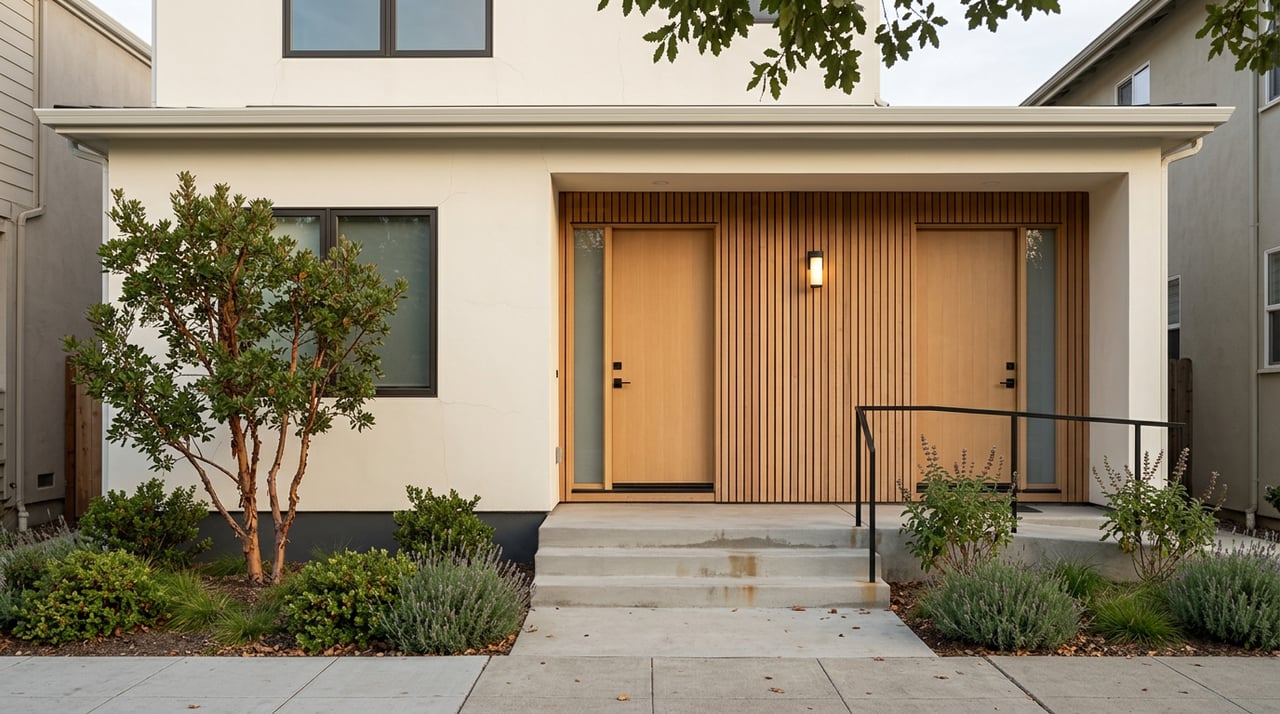
- Duplexes and triplexes or fourplexes with stacked or side-by-side units.
- Small vintage “flats” buildings that read like multifamily but with 3–4 homes.
- Single-family homes with ADU potential, including garage conversions or a detached backyard unit.
These building types exist across North Oakland and along the Temescal and Rockridge corridors. They are the core options for an owner-occupant who wants rental income from day one.
North Oakland vs Temescal vs Rockridge
Blocks in Temescal and Rockridge often command higher asking rents and sale prices than other North Oakland micro-areas. As a buyer, you might pay a premium for a walkable, transit-friendly block and stronger rent potential. Use this when weighing your total monthly cost against expected rent.
- Market context to ground your search: North Oakland’s median sale price was about 970,000 dollars in January 2026. Sample asking rents in February 2026 ran around 2,163 dollars in Temescal and 2,347 dollars in Rockridge for all bedroom counts. Treat these as directional figures and always pull unit-level rent comps before you write an offer.
What to look for on a walkthrough
- Separate entrances or a clear way to create them.
- Independent kitchens and bathrooms in each unit.
- Split utilities and meters, or a path to add them.
- Layouts that provide privacy and safe egress, especially for any basement or attic spaces.
- Adequate parking if tenant needs or local rules make that important.
Zoning basics you must confirm
Your plan lives or dies on what the parcel allows. Start by checking the City of Oakland’s interactive zoning map for the specific address, then cross-check relevant code sections. The map shows base zoning and overlays that can affect height, setbacks, historic limits, or environmental factors like creeks and high-fire areas. Use the city’s map to look up a parcel’s zoning and overlays.
Oakland has also moved to speed up smaller housing projects. Many single-family, duplex, triplex, and fourplex projects can qualify for ministerial or streamlined review. That can reduce discretionary delays for 1–4 unit conversions or small new builds, but eligibility is site specific. Review the city’s guidance on streamlined review for 1–4 family housing projects and verify at the parcel level.
State rules that can expand options
California’s recent laws have opened doors for some single-family parcels. SB 9 allows, in certain cases, a lot split and two-unit development, while statewide ADU laws streamline permitting for accessory units. Local overlays and designations still control feasibility. Historic status, flood or high-fire hazard, and other constraints can limit what you can do. For an accessible primer, read a background summary on SB 9’s intent and limits, then confirm local feasibility with Oakland Planning. A good starting point is this SB 9 overview and the city’s ADU pages below.
ADUs in Oakland: rules, costs, timelines
ADUs are central to many house-hack plans. Oakland permits ADUs on most residential lots and provides clear steps, contact emails, and even pre-approved plans that can shorten review. Learn how sizing, placement, and design work in practice on the city’s ADU overview and pre-approved plans page.
Typical cost ranges and timing
City guidance shares order-of-magnitude costs you can use to frame a budget while you collect bids:
- Conversions of existing space often range about 200 to 650 dollars per square foot depending on scope.
- Detached new or prefab ADUs often land around 300 to 500 dollars per square foot.
Oakland uses a two-step submission flow. You will confirm zoning compliance, then apply for building permits. Pre-approved plans can shorten plan check time. Actual processing times vary, so confirm current averages with the city when you start.
If you encounter an unpermitted secondary unit during due diligence, Oakland offers an amnesty or legalization path for some situations. This can matter if you inherit a unit that does not show up in public records.
Short-term rental rules for ADUs
Plan your rental strategy before you build. ADUs are intended for long-term rental of 30 days or more. Short-term use is handled under separate planning rules and may require different approvals. You will also need a business license for long-term rental activity. Review the city’s current short-term rental regulations and align your plan with those policies.
Operating rules you need to know
Before you underwrite rents, confirm whether the units are covered by Oakland’s Rent Adjustment Program. Many multifamily rental units built before January 1, 1983 are covered, which means limits on annual rent increases and a petition process. Single-family homes and most condos are generally exempt. Learn about coverage, petitions, and exemptions on the city’s Rent Adjustment Program page.
Oakland also requires rental-unit registration and charges a Rent Adjustment Program fee per covered unit. As of July 1, 2025, the fee was 137 dollars per unit. Failure to register can become an affirmative defense in many eviction actions. Add registration, fees, and a business license to your operating checklist.
Financing routes that work for house hackers
Financing shapes your options. Owner-occupant programs can make a duplex or 3–4 unit purchase more attainable.
FHA for 2–4 unit owner-occupants
FHA insures loans on one to four unit properties when you occupy one unit as your primary residence. Lenders often count a portion of projected rent from the other units toward your qualifying income. For three and four unit purchases, FHA requires cash reserves and a self-sufficiency test. Get the details directly from HUD’s Single Family Housing Policy Handbook 4000.1, then confirm how a local lender applies the rules.
Conventional loans and 2026 limits
Conventional financing is also common. For 2026, the FHFA announced higher conforming loan limits nationwide. Alameda County is a high-cost area, and the high-cost ceiling for one-unit homes is 1,249,125 dollars. Limits for two to four units are higher than one-unit caps. Lenders will use these limits and program rules when structuring your loan. Read the 2026 limits update from the FHFA announcement and ask your lender how it applies to 2–4 unit loans.
In practice, conventional loans for owner-occupied 2–4 unit properties often require larger down payments than FHA. Many buyers see requirements in the 15 to 25 percent range depending on unit count, program, and credit profile. FHA can allow 3.5 percent down for eligible borrowers. For a helpful overview of lender modeling, see this guide to financing multiunit properties and verify specifics with your lender.
Local resources to watch
Oakland has offered an ADU Loan Program for eligible homeowners to build or legalize ADUs. Program availability can change, so check the city’s ADU Loan Program page for current status.
Does the math pencil in 2026?
Use real, current inputs when you model a deal. Here is a simple framework that uses recent neighborhood data to ground your first pass. Always update these with live rate quotes, tax and insurance estimates, and unit-level rent comps.
- Price reference: North Oakland’s median sale price was about 970,000 dollars in January 2026.
- Rent reference: Sample asking rents in February 2026 were about 2,163 dollars in Temescal and 2,347 dollars in Rockridge across all beds. A typical one or two bedroom in these bands often leases in the mid 2,000s. Use unit-level comps to refine your estimate.
If you buy a duplex near 970,000 dollars with an FHA owner-occupant loan and you can rent the second unit for about 2,400 to 2,600 dollars, that rent meaningfully reduces your carrying cost. It likely will not cover the entire mortgage payment at 2026 prices, but it softens the monthly outlay. The more rentable units you control, the larger the offset.
Quick back-of-the-envelope steps
- Start with realistic rent comps by unit. For qualification, many lenders count 75 percent of projected rent from the non-owner units. Ask your lender how they model this.
- Add a vacancy factor of about 4 to 7 percent and an operating expense ratio of about 25 to 35 percent for a conservative pro forma.
- Layer in property taxes, insurance, utilities you pay, and any RAP fees or registration costs.
- Check whether units are covered by rent adjustment rules and cap your rent growth assumptions accordingly.
- Decide if you will add an ADU now or later. Use the city’s cost ranges, then get three local bids for site-specific pricing.
Due diligence checklist for house hackers
Use this list to vet a property before you fall in love.
- Confirm parcel zoning and overlays on the City of Oakland zoning map. Look for historic designation, creek setbacks, and high-fire or flood overlays.
- Check whether the units are covered by the Rent Adjustment Program and whether the property is registered. Factor rent caps into your underwriting.
- If your plan includes an ADU, review setbacks, design standards, and pre-approved plans on the city’s ADU overview. Confirm utility capacity and any overlay constraints.
- Verify whether any existing units are unpermitted. Ask about Oakland’s ADU legalization path if relevant.
- Talk to a lender early. Confirm FHA or conventional fit, 2026 loan limits, required reserves for 3–4 unit purchases, and how they will count projected rent. Reference HUD’s Handbook 4000.1 for FHA specifics.
- Build unit-level rent comps and model conservatively. Many lenders use a 75 percent rent credit in qualification. Include vacancy and a realistic expense ratio.
- If you will convert space or build an ADU, consult a planner, architect, or contractor who knows Oakland’s processes. Consider pathways that qualify for streamlined review.
A local partner for a smart house hack
House hacking in North Oakland can be a powerful path to long-term stability. With careful due diligence, a clear read on zoning, and the right financing plan, you can set yourself up to live well while building equity.
If you want a local guide who knows these blocks, the permitting landscape, and how to underwrite rent and ADU potential, we are here to help. Reach out to the Jodi Nishimura Group for a friendly, strategic plan tailored to your goals.
FAQs
Can I use rental income from a duplex to qualify for a loan?
- Yes. FHA and many conventional lenders allow owner-occupied 2–4 unit purchases and will often count a portion of projected rent toward qualifying income. FHA details are in HUD’s Handbook 4000.1. Always confirm with your lender.
Are duplexes in Oakland covered by rent control rules?
- Many multifamily units built before January 1, 1983 fall under Oakland’s Rent Adjustment Program, which limits annual rent increases and provides a petition process. Single-family homes and most condos are generally exempt. Read the city’s RAP overview and confirm coverage before you buy.
Can I rent an ADU as a short-term rental in Oakland?
- Oakland treats ADUs as long-term housing for 30 days or more. Short-term activity is regulated separately and may require approvals. Review the city’s short-term rental regulations before assuming nightly rental income.
How do I check if an address allows a duplex or ADU?
- Start with the interactive zoning map, then verify applicable code sections and overlays. For ADUs, review the city’s ADU overview and pre-approved plans and confirm feasibility with Planning.
What are typical ADU costs in Oakland in 2026?
- City guidance shows ballpark ranges of about 200 to 650 dollars per square foot for conversions and 300 to 500 dollars per square foot for detached or prefab ADUs. Get three site-specific bids and consider pre-approved plans to shorten review.
What loan limits apply in Alameda County for 2026?
- The FHFA raised conforming limits for 2026, and Alameda County is a high-cost area. The one-unit high-cost ceiling is 1,249,125 dollars, with higher caps for 2–4 units. See the FHFA 2026 limits announcement and verify program details with your lender.