If you have looked at Rockridge prices and wondered why homes close to College Avenue and BART can command such a premium, you are asking the right question. In this part of Oakland, buyers are often paying for daily ease as much as square footage. Understanding that tradeoff can help you buy smarter or position your home more clearly if you plan to sell. Let’s dive in.
Why Rockridge commands a premium
Rockridge offers a lifestyle that is hard to replicate in many East Bay neighborhoods. Walk Score rates Rockridge at 90, with a Transit Score of 59 and a Bike Score of 76, which points to a place where many daily errands can be done without a car.
That convenience centers on two anchors: College Avenue and Rockridge BART. College Avenue serves as the neighborhood’s mile-long commercial heart, while Rockridge Station at 5660 College Avenue gives residents direct rail access and strengthens the area’s car-light appeal.
AC Transit adds another layer of everyday usability. The 51A route connects Rockridge BART to Fruitvale BART via College Avenue and Broadway, which supports local trips as well as commuting. For many buyers, that makes Rockridge more than a nice address. It makes daily life simpler.
What buyers are paying for
In Rockridge, the premium is often about time savings, walkability, and transit access. A shorter walk to coffee, groceries, restaurants, and BART can carry real value, especially if you want a neighborhood where getting around feels easy.
Recent market numbers show how strongly buyers price that convenience. Redfin reported a median sale price of $1.949 million in the three months ending May 2026, compared with $884,000 for Oakland overall. Zillow’s home value index for Rockridge was $1.835 million as of June 30, 2026, while Homes.com reported a 12-month median sale price of $1.685 million and an average value of $1.773 million.
Those figures are not in conflict. They use different methods and time periods, but they all tell a similar story: Rockridge is a premium submarket, and location convenience is a major reason why.
The College Avenue effect
The blocks near College Avenue tend to deliver the strongest version of the Rockridge lifestyle. You are closest to dining, retail, transit, and neighborhood activity, which can make the area feel especially practical for buyers who want a car-light routine.
That is also where homes are often more compact. Homes.com reports a median lot size of 4,356 square feet in Rockridge overall, and recent near-core examples include a 3,240 square foot lot on Auburn Avenue, a 4,000 square foot lot on Lawton Avenue, and a 5,400 square foot lot on 63rd Street.
This is one of the clearest truths about Rockridge real estate: near the core, buyers are often paying less for land and more for access. If you want to step out your door and reach College Avenue or BART quickly, you may accept a smaller lot or a more compact floor plan.
Home style shapes the value story
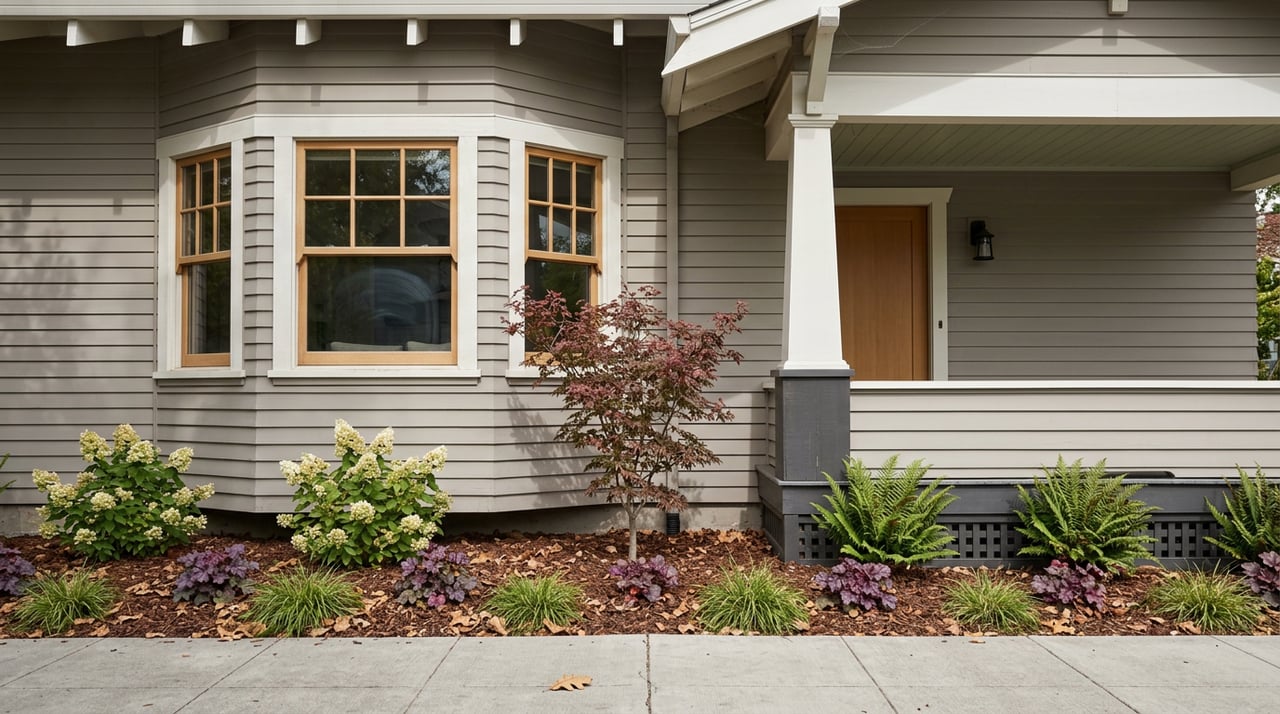
Rockridge is not only about location. Its housing character also plays a big role in buyer demand. Oakland planning guidance describes the area as largely early-20th-century Craftsman and bungalow housing, often with smaller proportions, porches, and stoops.
Homes.com echoes that picture, noting that many homes were built in the 1920s and are commonly Craftsman-inspired or California bungalow in style. For buyers, that architectural consistency adds charm and identity. For sellers, it means presentation and condition can matter a great deal, especially when original details and thoughtful updates work together.
The neighborhood’s numbers help explain the housing stock too. Homes.com reports an average single-family home size of 1,887 square feet and a median year built of 1921. Even two-bedroom homes can carry meaningful value, with a reported median sale price of $1.05 million.
Smaller homes, big price tags
One reason Rockridge can surprise buyers is that home size does not always line up neatly with price expectations. Smaller renovated homes can still list around $1.8 million, while larger five-bedroom homes often approach $2.5 million.
That spread shows how much condition, layout, and especially location can influence value. In a neighborhood where convenience is part of the product, a beautifully updated smaller home near the commercial core may compete very well against a larger property farther away.
For buyers, this means you should weigh price per square foot carefully, but not in isolation. The daily experience of the location matters here more than in many other neighborhoods.
Upper Rockridge offers a different tradeoff
A few blocks uphill, the value equation starts to shift. Upper Rockridge is generally associated with larger lots, winding hillside streets, and more of a single-family residential setting.
Homes.com reports a median lot size of 6,534 square feet in Upper Rockridge, and a recent example on Proctor Avenue sat on an 8,500 square foot lot. Compared with the flatter core near College Avenue, that often means more outdoor space, more privacy, and in some cases Bay views.
The tradeoff is straightforward. As you move uphill, you often gain land, quiet, and a more removed residential feel, but you give up some immediacy to shops, transit, and the neighborhood’s main commercial corridor.
Rockridge buyers are choosing between immediacy and space
Most Rockridge home searches come down to one practical question: Do you want the easiest daily access, or do you want more room? That tension shapes both pricing and buyer decisions across the neighborhood.
Near College Avenue and Rockridge BART, you are usually buying:
- Faster access to rail transit
- Easier walks to retail and dining
- A stronger car-light lifestyle
- More exposure to neighborhood activity
- Typically smaller lots and more compact living footprints
Farther uphill, you are usually buying:
- Larger lots
- Quieter streets
- More separation from the commercial corridor
- A more single-family residential feel
- A longer walk back to College Avenue and BART
Neither choice is universally better. It depends on how you want to live and what tradeoffs feel worthwhile to you.
Future development matters too
Another reason the station area deserves attention is that it may continue to evolve. BART has identified two potential development parcels at Rockridge Station that are currently used for parking.
At the same time, Oakland’s general plan update expects new development outside Downtown to be directed along major transportation corridors and transit hubs, including College Avenue and the Rockridge BART station area. That does not tell you exactly what future projects will look like, but it does suggest that the corridor may continue to see development pressure over time.
For buyers, that means the transit premium may remain important, even as the area changes. For sellers, it reinforces why location near the corridor continues to stand out in the market.
What this means if you are buying
If you are shopping in Rockridge, it helps to be very clear about your priorities before you start comparing homes. A smaller home near the core may deliver more value to you than a larger one uphill if your goal is to walk more and drive less.
You should also expect competition. Redfin described Rockridge homes as highly competitive, often selling in 14 days and frequently above list price. In a fast-moving submarket like this, clarity matters as much as budget.
A few helpful questions to ask yourself include:
- How often would you realistically use BART?
- Do you want to walk to shops and restaurants several times a week?
- Would you trade yard size for a shorter daily routine?
- Do you prefer neighborhood energy or a quieter residential setting?
- How much does lot size matter compared with location?
What this means if you are selling
If you are selling in Rockridge, your home’s story should reflect the kind of value buyers are actually shopping for. That means going beyond bedroom count and square footage.
A home near College Avenue and BART may resonate because of convenience, rhythm, and everyday ease. A home farther uphill may stand out because of space, privacy, lot size, or views. In either case, the strongest marketing usually connects the property to the lifestyle it supports.
That is especially true in a neighborhood with distinctive architecture and varied micro-locations. Buyers are not only comparing homes. They are comparing ways of living within Rockridge itself.
If you want help interpreting Rockridge’s block-by-block tradeoffs, pricing a home with more precision, or planning your next move in the East Bay, the Jodi Nishimura Group is here to help.
FAQs
How walkable is Rockridge in Oakland?
- Rockridge has a Walk Score of 90, a Transit Score of 59, and a Bike Score of 76, which indicates strong walkability and a practical car-light lifestyle.
Why are Rockridge home prices so high?
- Buyers are often paying for proximity to College Avenue, Rockridge BART, daily convenience, and the neighborhood’s early-20th-century housing character, not just for larger homes or lots.
Are Rockridge lots smaller near College Avenue?
- Yes. Near the core, recent examples ranged from 3,240 to 5,400 square feet, while the neighborhood-wide median lot size reported by Homes.com is 4,356 square feet.
What is the difference between Rockridge and Upper Rockridge?
- Rockridge near College Avenue usually offers more walkability and quicker transit access, while Upper Rockridge generally offers larger lots, a quieter hillside setting, and more distance from the commercial corridor.
Could the Rockridge BART area change in the future?
- Yes. BART has identified potential development parcels at the station, and Oakland planning documents direct future growth toward transit corridors and station areas such as College Avenue and Rockridge BART.